


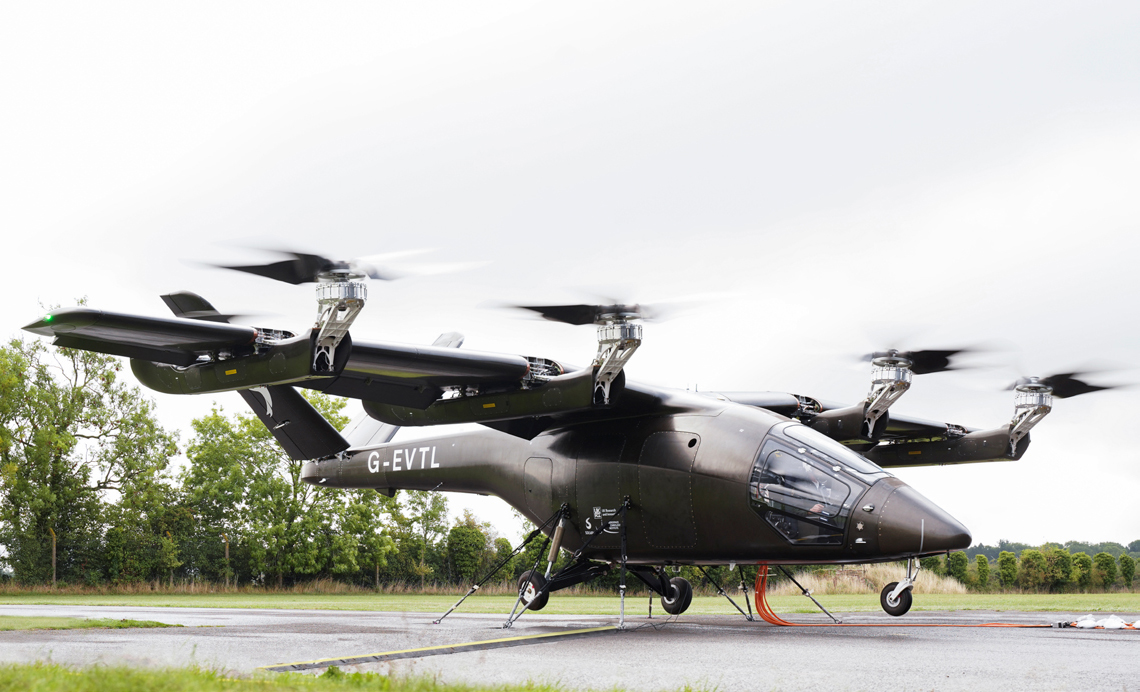
British electric aircraft manufacturer Vertical Aerospace has welcomed the release of the UK Civil Aviation Authority’s (CAA) new “eVTOL Delivery Model”, a regulatory framework that sets out how electric vertical take-off and landing (eVTOL) aircraft could enter commercial service from 2028.
The announcement marks one of the clearest government roadmaps yet for integrating next-generation air mobility into national airspace, and is being hailed by industry leaders as a “landmark moment” for the UK’s aviation future.
Vertical Aerospace, based in Bristol, said the framework “gives confidence to the entire ecosystem”, from manufacturers and regulators to investors and operators, that eVTOL technology is moving from concept to commercial reality. The company has been developing its five-seat VX4 electric aircraft, designed for zero-emission short-haul flights of up to 100 miles, and is one of several British firms at the forefront of the emerging sector.
“This regulatory clarity puts the UK in a leadership position,” said a Vertical Aerospace spokesperson. “Having a defined pathway to certification and operation means we can plan, build and invest with confidence.”
The CAA’s model lays out the staged approach needed to certify new aircraft, build infrastructure such as vertiports, and establish flight rules and safety oversight for electric air taxis. It also aligns with international efforts through agencies such as the European Union Aviation Safety Agency (EASA) and the US Federal Aviation Administration (FAA), paving the way for eventual global interoperability.
A boost for Britain’s aerospace ambitions
The framework arrives as the UK government increases support for sustainable aviation technology and innovation through initiatives such as Future Flight and the Jet Zero Council. Vertical Aerospace and its partners, which include Rolls-Royce, Honeywell and GKN Aerospace, have already received significant funding to advance design, testing and certification.
Industry observers say the combination of regulatory clarity and industrial support could help position Britain as a hub for advanced air mobility (AAM), generating new engineering jobs and export opportunities.
The race to 2028
Vertical plans to continue flight testing the VX4 through 2026, aiming for full certification by the time commercial operations become viable later in the decade. The company has pre-orders from major airlines including Virgin Atlantic and American Airlines, which see eVTOLs as a way to offer fast, emission-free connections between city centres and airports.
While challenges remain, from battery performance and airspace integration to public acceptance, the publication of the CAA’s roadmap signals growing momentum behind eVTOL flight in the UK.
As Vertical Aerospace put it: “This is a crucial step towards making zero-emission flight a part of everyday life. The UK now has the blueprint to lead the world into the next era of aviation.”