Airlines can slash their carbon footprint by more than a quarter without investing in new aircraft or alternative fuels—simply by rethinking how they configure their cabins, according to new analysis from aviation data specialist Cirium.
Research from Cirium’s EmeraldSky platform shows that higher seating density can deliver reductions of over 25% in carbon dioxide emissions per available seat-kilometre (CO₂/ASK). The gains come not from changing the type of aircraft flown, but from optimising how space inside the cabin is used.
While denser seating has traditionally been viewed as a compromise on passenger comfort, Cirium argues it can play a powerful role in cutting per-passenger emissions. “Once an aircraft is airborne, the fuel burn is largely fixed,” the report notes. “The more seats available to share that load, the lower the per-passenger emissions.”
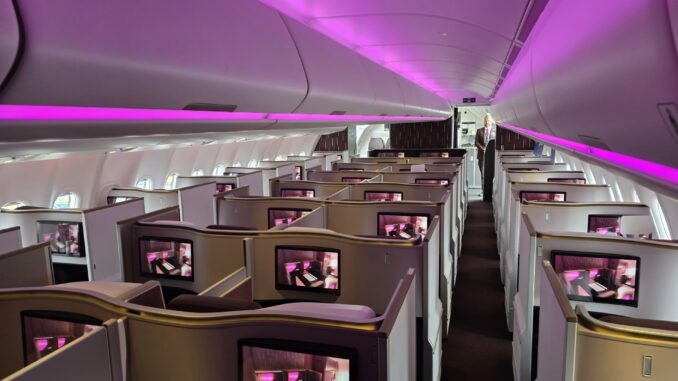
One striking example comes from Cebu Pacific, which operates the Airbus A330-900neo with 459 seats—138 more than the global average for that aircraft type. The result is the same plane, on the same route, with the same engines, but a substantially smaller environmental footprint.
The findings challenge the view that meaningful emissions cuts must rely solely on new propulsion systems, sustainable aviation fuels (SAF), or long-term research and development. Instead, Cirium says airlines can achieve immediate, measurable improvements through operational choices, without regulatory changes or major infrastructure investment.
The company emphasises that new technologies remain crucial for the industry’s path to net zero, but notes that cabin configuration should be part of a broader sustainability conversation. For carriers juggling growth with environmental targets, the flexibility to improve efficiency through design changes could prove vital.
There are commercial benefits too. In a market increasingly attuned to environmental performance, demonstrating operational efficiency, whether through cabin layouts, route planning, or aircraft utilisation, can offer a competitive edge.
However, Cirium acknowledges there are trade-offs. Higher-density cabins can compromise comfort and may not align with every airline’s brand or market. Striking the right balance between passenger experience and emissions reduction will depend on individual strategies.
“Emissions performance isn’t just about what you fly, but how you configure it,” the report concludes.
Discover more from UK Aviation News
Subscribe to get the latest posts sent to your email.