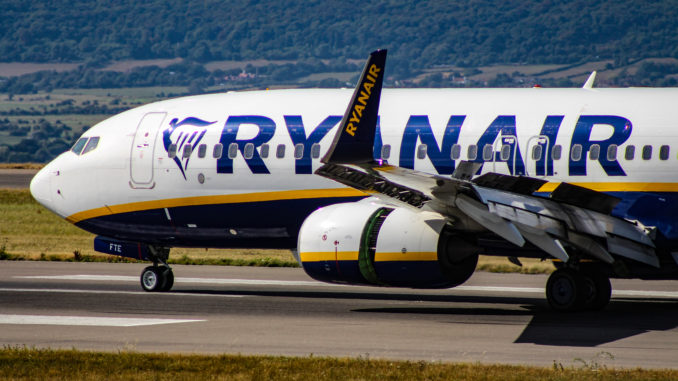
In a significant ruling for employment rights, the Court of Appeal has upheld a key judgement that a Ryanair pilot, engaged via an aviation employment agency, was in fact a ‘worker’ and not a self-employed contractor as previously claimed. The decision is expected to have widespread implications for employment practices across the aviation sector and beyond.
The court found that pilot Jason Lutz, who was hired through agency Storm Global to fly for Ryanair, had been wrongly classified as self-employed. Instead, it ruled he was both a ‘worker’ of Storm Global and an ‘agency worker’ contracted out to Ryanair—entitling him to essential employment protections such as holiday pay, sick leave, and regulated rest breaks.
The case was backed by the British Airline Pilots’ Association (BALPA), which hailed the outcome as a “huge win” not only for Lutz and pilots in similar arrangements, but also for agency workers throughout the UK. The verdict sets a legal precedent that may force companies to review the classification of freelance and contract staff, particularly those engaged via third-party recruitment firms.
Amy Leversidge, General Secretary of BALPA, said: “This is a landmark legal victory for not only Jason Lutz and our member pilots, but agency workers all across the UK aviation industry and beyond.
“For too long, aviation workers have been denied fundamental rights through complex and ambiguous employment arrangements. The Court of Appeal’s unanimous judgement sends a powerful message: labels like ‘self-employed’ cannot be used to sidestep employment protections.”
The judgement echoes earlier victories for gig economy workers, including the Supreme Court’s 2021 ruling against Uber and the 2018 decision involving courier firm Hermes. In those cases, too, workers were found to have been wrongly labelled as self-employed to avoid granting employment rights.
Alice Yandle, a partner at legal firm Farrer & Co, which represented BALPA in the case, added: “For the first time, the Court of Appeal has addressed how worker status and agency worker rights apply in the context of long-term assignments.
“This outcome reflects our ability to deliver results in complex, first-of-their-kind cases that push the boundaries of existing legal frameworks.”
The use of service companies and third-party intermediaries is a widespread practice in aviation. This ruling is likely to pave the way for further claims from pilots and other workers seeking compensation for denied entitlements.
Leversidge added: “The consequences of this ruling go to show that companies trying to use the fiction of a service company to deny workers their rights would be better off ensuring that legal protections and workers’ rights are provided from the start.”
The decision is being seen as a turning point in the push for fairer treatment of agency and gig economy workers across multiple industries.
Discover more from UK Aviation News
Subscribe to get the latest posts sent to your email.