


COMAC, China’s state-backed aircraft manufacturer, is expected to more than triple its annual aircraft deliveries by 2030, according to the latest forecast from aviation intelligence firm IBA.
The Commercial Aircraft Corporation of China (COMAC) is projected to deliver 145 aircraft per year by the end of the decade, marking steady progress in China’s efforts to build an independent and competitive commercial aviation industry.
IBA’s data platform, IBA Insight, estimates COMAC will deliver:
- 50 aircraft in 2025
- 57 in 2026
- 79 in 2027
- Around 90 in 2028
- Reaching 145 deliveries in 2030
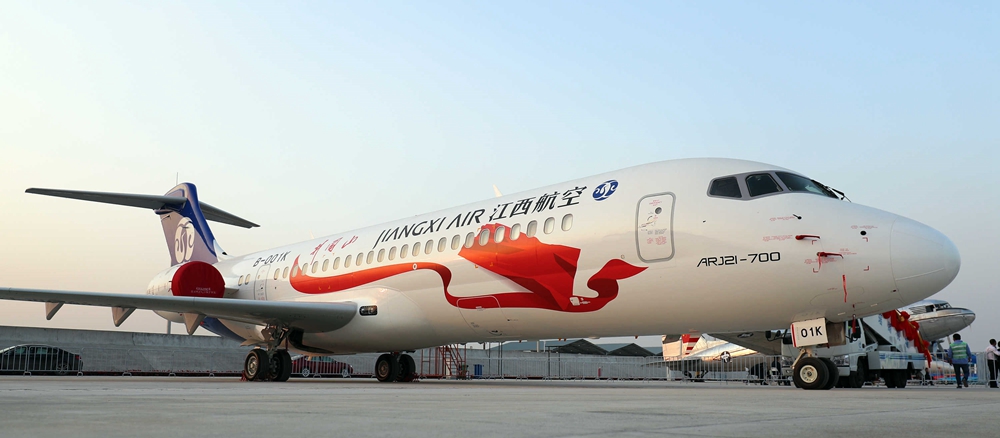
Most of these aircraft will be C919 narrowbodies, COMAC’s flagship model. The ARJ21 regional jet (sometimes referred to as the C909) will continue in production, while development continues on the C929 widebody aircraft.
Domestic Strength, Global Niche
By 2030, COMAC is expected to supply around 65% of new narrowbody aircraft delivered to Chinese airlines. However, when older Airbus and Boeing aircraft are included, COMAC will still only represent around 7% of the total fleet in China.
On the global stage, COMAC’s presence will remain limited. Combined, the C919 and ARJ21 are forecast to make up just 2% of the world’s commercial aircraft fleet in 2030. Nonetheless, IBA says this marks the beginning of a challenge to the long-standing Airbus-Boeing duopoly.
Challenges Remain
Despite the progress, COMAC still faces several hurdles. Although the July 2025 reinstatement of US export licences have helped stabilise production by allowing the delivery of key engines—CFM’s LEAP-1C for the C919 and GE’s CF34-10A for the ARJ21—the company remains heavily dependent on imported engines and avionics.
This reliance exposes COMAC to geopolitical and supply chain risks, and although it has built up a stockpile of parts, it offers only short-term protection. COMAC’s own CJ-1000A engine, intended as a domestic alternative, is still years away from being commercially ready.
Certification is another major barrier. The C919, which entered service in 2023, is unlikely to receive European Union Aviation Safety Agency (EASA) certification before 2028, limiting its ability to expand into international markets.
In the meantime, COMAC is focused on domestic routes and select regional placements to build its reputation and operational record.
Fleet and Performance Growth
As of August 2025, COMAC’s total in-service fleet had grown to 182 aircraft, mostly operated by major Chinese carriers including China Southern, Air China, and China Eastern. Smaller operators such as Chengdu Airlines, China Express, VietJet, and Lao Airlines also have aircraft in service.
Operational performance is improving. The ARJ21’s average daily usage has risen to 3.4 hours, up from under one hour in 2018. The newer C919 is averaging 2.6 hours per day since entering service. While both figures fall short of the industry benchmark for narrowbody jets—typically around seven hours per day—utilisation is expected to rise as maintenance capabilities improve and airline confidence grows.
A Slow but Steady Rise
IBA concludes that while COMAC is unlikely to challenge Airbus or Boeing on a global scale this decade, it is steadily becoming a credible multi-sector competitor. With strong government backing, growing domestic demand, and gradual progress on international certification, COMAC is poised to play an increasingly important role in the global commercial aviation market.