The United Kingdom has long been at the heart of global aviation, from the pioneering jet age to the rise of world-leading airlines. Yet, beneath the soaring achievements lies a series of tragedies that reshaped the course of aviation safety. These fatal air accidents not only changed engineering and procedures but also the way the world thinks about flying.
The Dawn of Jet Tragedy – The de Havilland Comet Disasters
In the early 1950s, Britain was the envy of the aviation world with the de Havilland Comet, the first commercial jet airliner. Sleek, fast, and futuristic, it symbolised post-war optimism.
That optimism was shattered when two Comets broke up in flight within months of each other, BOAC Flight 781 near Elba in 1954, and South African Airways Flight 201 departing Rome shortly after.
The subsequent investigation led by the Royal Aircraft Establishment revealed a then-unknown phenomenon: metal fatigue caused by repeated pressurisation, worsened by the jet’s square windows. The lessons learned reshaped aircraft design forever, leading to rounded windows, reinforced fuselages, and rigorous stress testing.

A Winter’s Night at Staines – BEA Flight 548 (1972)
On 18 June 1972, BEA Flight 548, a Trident jet bound for Brussels, crashed shortly after take-off from Heathrow, killing all 118 people on board.
The cause was traced to premature retraction of the aircraft’s leading-edge devices, resulting in an unrecoverable stall. The captain’s health, crew dynamics, and workload pressures were also contributory factors.
In the wake of Staines, the aviation industry adopted Crew Resource Management, an innovation in cockpit culture that emphasised teamwork and open communication between pilots, regardless of rank.
The Manchester Inferno – British Airtours Flight 28M (1985)
Tragedy struck again in 1985 when a British Airtours Boeing 737 caught fire during an aborted take-off at Manchester Airport. Although the aircraft never became airborne, 55 passengers lost their lives, most to smoke inhalation.
The disaster exposed the deadly flaws in cabin design and evacuation procedures. As a direct result, regulations were introduced to improve fire-resistant materials, widen escape paths, and speed up evacuations, reforms that continue to save lives today.

Lockerbie – Pan Am Flight 103 (1988)
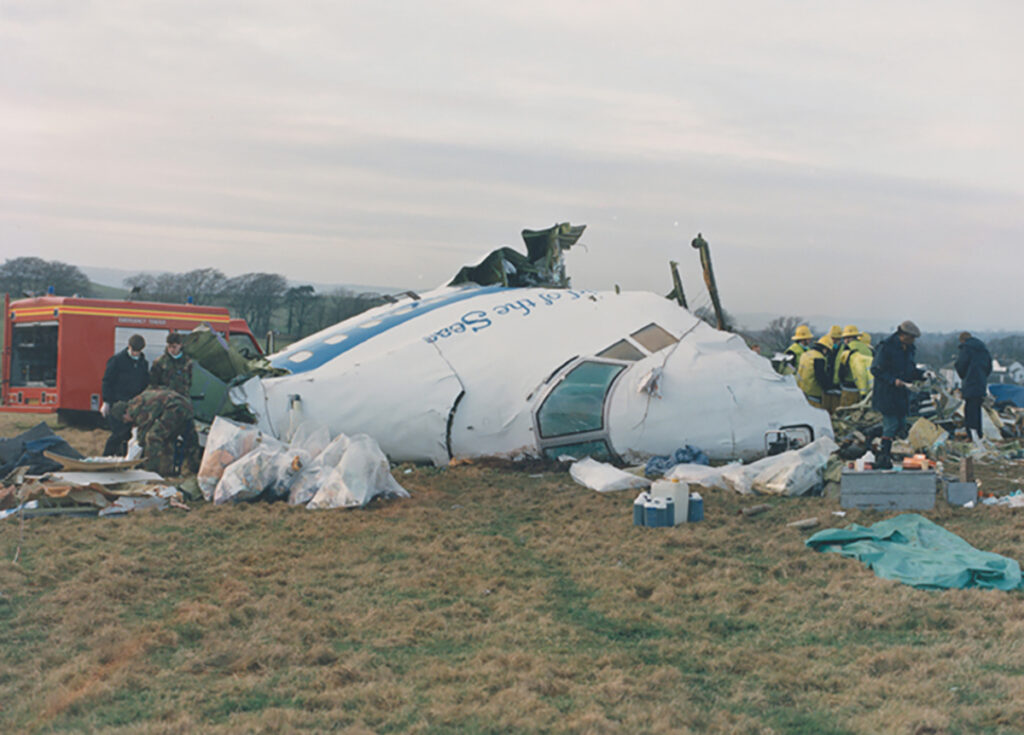
The bombing of Pan Am Flight 103 over Lockerbie on 21 December 1988 remains one of the darkest chapters in aviation history. The Boeing 747, en route from London to New York, was destroyed mid-air by a terrorist bomb, killing 270 people, including 11 on the ground.
The investigation spanned continents, leading to major reforms in airport security, passenger screening, and international counterterrorism cooperation. Lockerbie became a turning point in how the world approached aviation security in the face of terrorism.
Kegworth – The Midlands Crash (1989)
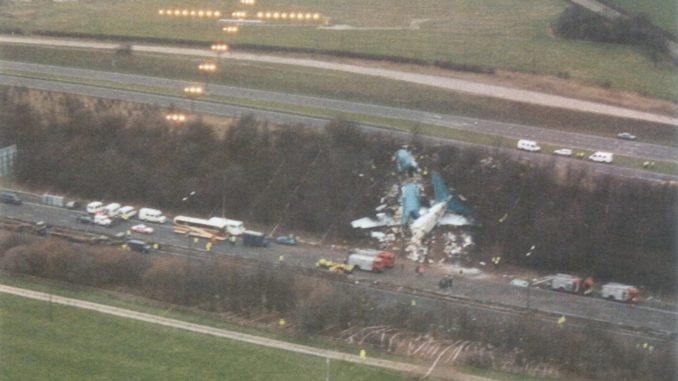
Less than a month after Lockerbie, British Midland Flight 92 crashed onto the M1 motorway embankment near Kegworth after an engine failure on its Boeing 737. Tragically, the pilots mistakenly shut down the working engine, leading to loss of power.
Forty-seven of the 126 people on board perished. Investigators found that unfamiliarity with the specific model’s engine layout and cockpit design contributed to the error. The aftermath brought comprehensive revisions to pilot training, cockpit ergonomics, and emergency protocols.

A Legacy of Learning
From the wreckage of these tragedies emerged progress. Each disaster prompted hard lessons, new safety laws, and engineering breakthroughs.
Today, the United Kingdom’s Air Accidents Investigation Branch (AAIB) continues to play a leading role in air accident investigation, ensuring that every flight that takes off benefits from decades of experience, often paid for in the hardest possible way. Modern air travel’s extraordinary safety record is built upon these painful but transformative lessons.
Britain’s Most Significant Airliner Accidents
| Accident | Date | Aircraft | Fatalities | Key Safety Legacy |
|---|---|---|---|---|
| BOAC Flight 781 (Elba) | 10 Jan 1954 | de Havilland Comet | 35 | Metal fatigue discovery; redesign of jet airliners |
| BEA Flight 548 (Staines) | 18 Jun 1972 | Hawker Siddeley Trident | 118 | Introduction of Crew Resource Management |
| British Airtours Flight 28M (Manchester) | 22 Aug 1985 | Boeing 737 | 55 | Improved cabin fire safety and evacuation standards |
| Pan Am Flight 103 (Lockerbie) | 21 Dec 1988 | Boeing 747 | 270 | Global reform of airport and baggage security |
| British Midland Flight 92 (Kegworth) | 8 Jan 1989 | Boeing 737 | 47 | Enhanced pilot training and cockpit design standards |
From Tragedy to Trust
Each of these disasters tells two stories, one of loss, and one of learning. Behind every accident report are the lives of passengers, crew, families, and investigators determined to ensure that such events never happen again.
For all the sorrow that marked these moments in British aviation history, they also gave rise to remarkable resilience and progress. The next time a jet lifts effortlessly into a grey British sky, it does so with the legacy of those lessons built into its frame, its systems, and its procedures.
In a very real sense, every safe landing today is a quiet tribute to those who never made it home.
Discover more from UK Aviation News
Subscribe to get the latest posts sent to your email.