With the publication of the preliminary report into the crash of flight AI171 from Ahmedabad to London Gatwick last month which killed 260 people, victims families and the wider aviation industry have been left with far more questions that answers.
We now know that shortly after taking off, as the aircraft reached 180 knots (IAS) one of the pilots turned the fuel cut-off switches from ‘Run’ to ‘Cut-off’ which immediately starves the engines of fuel shutting them down, this is something that is only ever normally done at the end of flight when the aircraft is parked at the gate.
A chilling voice, which has yet to be attributed to a specific pilot, on the cockpit voice recorder (CVR) is heard asking why did they cut-off to which the other pilot said he did not do so. But the fuel cut-off switches are not something can be remotely or automatically activated. They also have a lift to unlock mechanism and metal guards to ensure they aren’t accidentally switched off.
We spoke to an experienced Boeing 787 Captain for a UK airline, who didn’t want to be named, who told us, it would be almost impossible to accidentally activate the fuel control switches, or mistake them for something else.
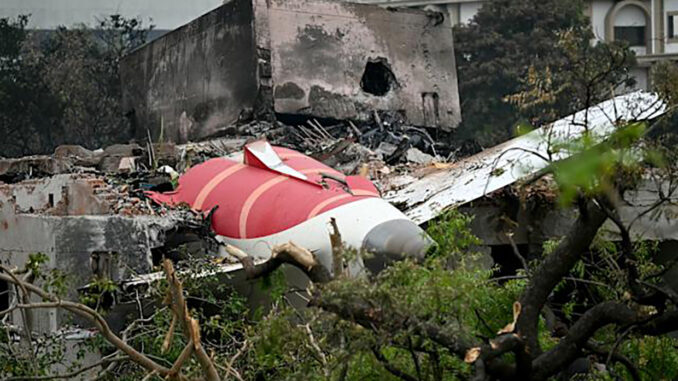
So this is where the big question comes in. Why did one of the two pilots of Air India Flight 171, who were both highly experienced, seemingly deliberately shutdown the engines during a phase of flight where maximum power was needed. The loss os power resulted in a loss of lift causing the aircraft to stall and crash into a Doctors hostel near the airport.
The report goes on to say that the fuel cut-off switches were immediately returned to the run position which initiated and automatic relight of the two engines in sequence but just as power was being restored, the crew simply ran out of altitude.
Miraculously one person survived the crash on the 12th June, a British Man who was sitting in Row 11, the point at which the carbon fibre fuselage fractured. The other 241 people onboard perished in the crash and ensuing fire.
That survivor reportedly heard a bang during the flight but this now seems to have been a red herring and could have been something like the RAT deployment, which was triggered when the engines were shut down.
The ongoing investigation by India’s Air Accident Investigation’s Bureau (AAIB) will now seek to establish why one of the pilots shut the engines down and the CVR will be a key factor in this as they work to establish which pilot did it and who’s voices can be heard saying what.
For Boeing and GE, which makes the aircraft and engines respectively, the report takes the pressure of them as no faults were found with the plane or its engines.
For the families of the victims of Flight AI171, they will want to know why their loved ones died in a completely serviceable aircraft being flown by two experienced and professional pilots.
Discover more from UK Aviation News
Subscribe to get the latest posts sent to your email.