


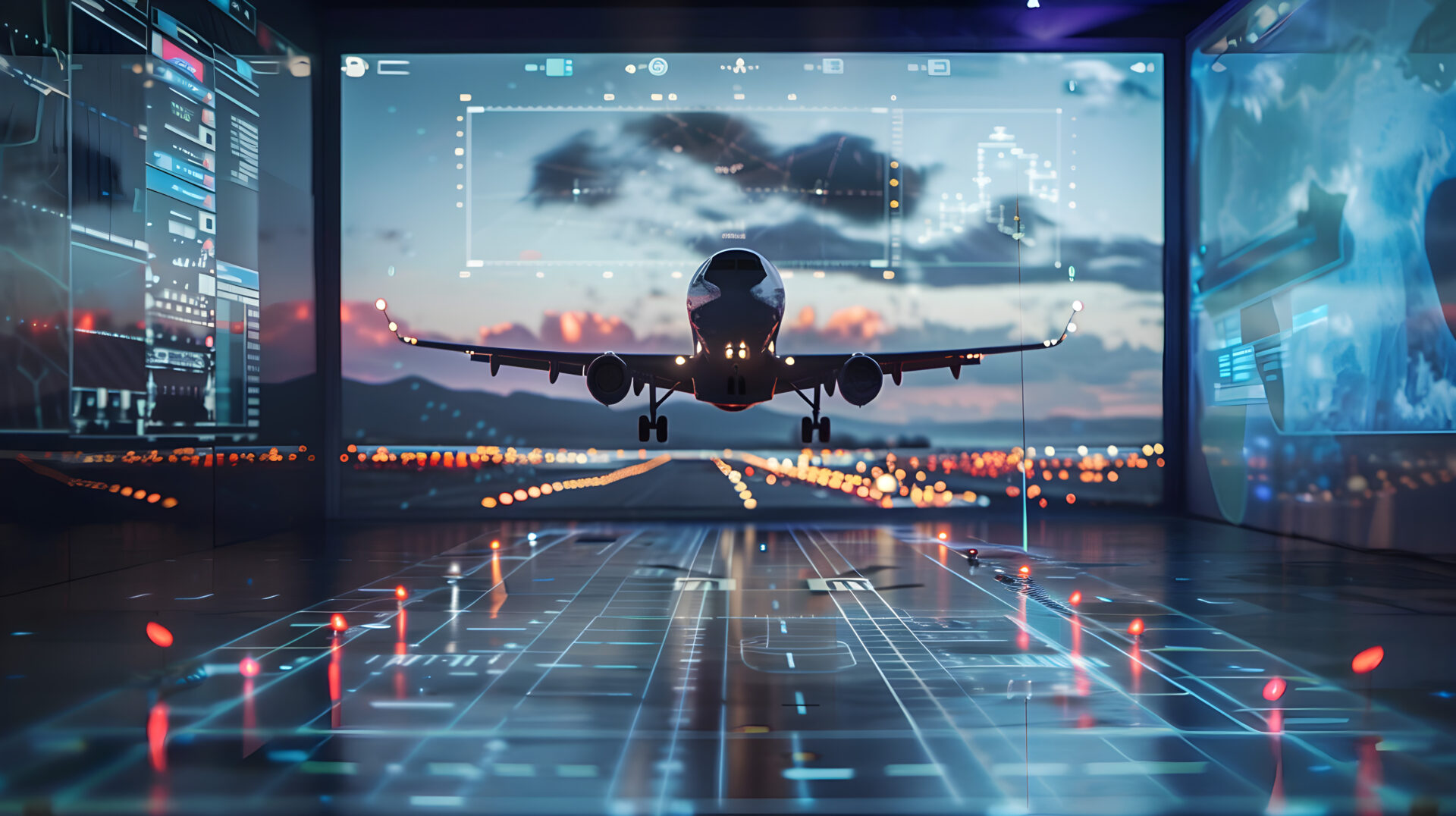
Introduction: A New Era for Pilot Training
Aviation has always demanded the highest standards of training. From the earliest biplanes to today’s modern jetliners, pilots undergo extensive education and simulation before taking control of an aircraft. In recent years, artificial intelligence (AI) has revolutionised this process. Intelligent flight simulators now offer unprecedented realism, adaptability, and data-driven insights, creating training environments far beyond what was possible with traditional methods.
But what does this mean for the industry, for pilots, and for the safety of passengers?
Why Flight Simulation Matters
The Foundations of Aviation Safety
Flight simulators have long been essential in aviation, providing safe environments to practise dangerous scenarios—engine failures, crosswind landings, or cockpit fires—without risking lives. According to the International Civil Aviation Organization (ICAO), over 60% of a pilot’s formal training hours are spent in simulators before qualification.
Limitations of Traditional Simulators
While effective, older simulators often rely on pre-programmed scenarios. This makes training predictable: after repeated sessions, trainees anticipate what will happen. Moreover, simulators historically lacked the capacity to learn from each pilot, creating a “one-size-fits-all” model.
The Role of AI in Flight Simulators
Modern AI systems analyse pilot behaviour in real time, adjusting difficulty based on performance. For instance, if a trainee demonstrates proficiency in crosswind landings, the simulator can introduce more complex variables like sudden microbursts or multiple concurrent failures.
Realistic Decision-Making Scenarios
AI algorithms generate dynamic, non-scripted challenges, mirroring the unpredictable nature of real flight. Instead of repeating the same hydraulic failure, trainees may encounter variations, forcing them to apply critical thinking.
AI simulators are connected to vast databases of historical flight data. By studying thousands of real incidents, they create scenarios based on actual patterns rather than hypothetical situations. This means trainees face challenges that pilots have genuinely encountered in service.
Expert Commentary: Industry Perspectives
Captain David Morgan, Chief Operating Officer at easyJet, recently stated: “AI-driven simulators allow us to train pilots not just for standard checklists but for adaptive problem-solving. This represents a leap forward in preparedness.”
Similarly, Dr. John Hansman, Professor of Aeronautics at MIT, explains: “Where traditional simulators rehearse a fixed set of emergencies, AI creates fluid conditions. This mimics real life, where problems rarely occur in isolation.”
Everyday Applications in Pilot Training
Cadet Programmes
Airlines can use AI to personalise training for new cadets. Trainees who struggle with spatial awareness may receive more scenarios focusing on instrument flying, while others may concentrate on workload management.
Experienced Pilot Refreshers
AI simulators aren’t limited to newcomers. Experienced pilots returning from career breaks—such as during the COVID-19 pandemic—benefit from adaptive modules that quickly identify weaknesses and accelerate re-certification.
Crisis Simulation
With AI, crisis training becomes multi-layered. Instead of one malfunction, pilots might face cascading problems—like a weather event combined with system alerts—requiring calm prioritisation, as in real-world aviation.
Human Skills Meet AI Support
AI has not diminished the importance of human judgement. On the contrary, it reinforces it. Just as writers may rely on digital assistants like Overchat AI – to rephrase their drafts while retaining their authentic voice, pilots can lean on AI simulators to sharpen decision-making while preserving uniquely human skills: empathy, intuition, and leadership in the cockpit.
Benefits Beyond Training
Cost Efficiency
AI-enabled simulators reduce the number of full-motion sessions required, saving airlines significant costs without compromising safety.
Continuous Monitoring
Trainee performance data is logged, allowing instructors to track long-term progress. This helps airlines identify skill gaps across entire cohorts.
Enhancing Confidence
By facing unpredictable and adaptive scenarios, pilots enter real aircraft with higher confidence, knowing they’ve handled more variables than traditional simulators could provide.
Potential Challenges and Risks
Over-Dependence on Technology
Critics argue that pilots could become too reliant on simulator guidance. Regulators stress the need for a balance: AI should support, not replace, traditional skill acquisition.
Ethical and Regulatory Questions
Should AI decide training curricula autonomously? Aviation authorities such as EASA and the UK CAA are currently reviewing standards to ensure safety isn’t compromised by algorithmic decision-making.
Accessibility
Smaller airlines and training schools may struggle with the high upfront costs of AI-integrated simulators. Without careful planning, this could create inequality in training quality across the industry.
The Future of AI in Pilot Training
Integration with Virtual Reality (VR)
AI combined with VR headsets could deliver hyper-realistic training without the need for full-motion simulators, making training more affordable and flexible.
Predictive Training Models
By analysing career-long data, AI could predict skill decline and recommend refresher sessions before problems arise.
Towards Autonomous Flight Support
While AI simulators are not designed to replace pilots, they may prepare future aviators for increasing levels of automation, bridging the gap between human command and machine assistance.
Conclusion: AI as a Co-Pilot in Training
The aviation industry thrives on innovation, but its highest priority remains safety. Intelligent flight simulators powered by AI represent not a departure from tradition but an enhancement of it. They prepare pilots for an unpredictable world by offering adaptive, data-driven challenges.
Ultimately, while AI tools may change how training is delivered, the fundamentals remain constant: pilots must demonstrate judgement, resilience, and calm under pressure. AI simply ensures they encounter a wider range of challenges before they ever step into a cockpit.